Semaglutide
An approved GLP-1 receptor agonist studied in large trials for type 2 diabetes and weight management.
Evidence grade A: Human trial data13 reports, 30,457 people
- FDA
- Approved2017
- 503A compounding
- Not listed
- EU (EMA)
- Authorised
- WADA
- Monitoring
Checked 2 Nov 2026. What each status means
This page lists no doses and links to no sellers. Studies are described as they were run. Why we leave doses out. The tracker records what you already do.
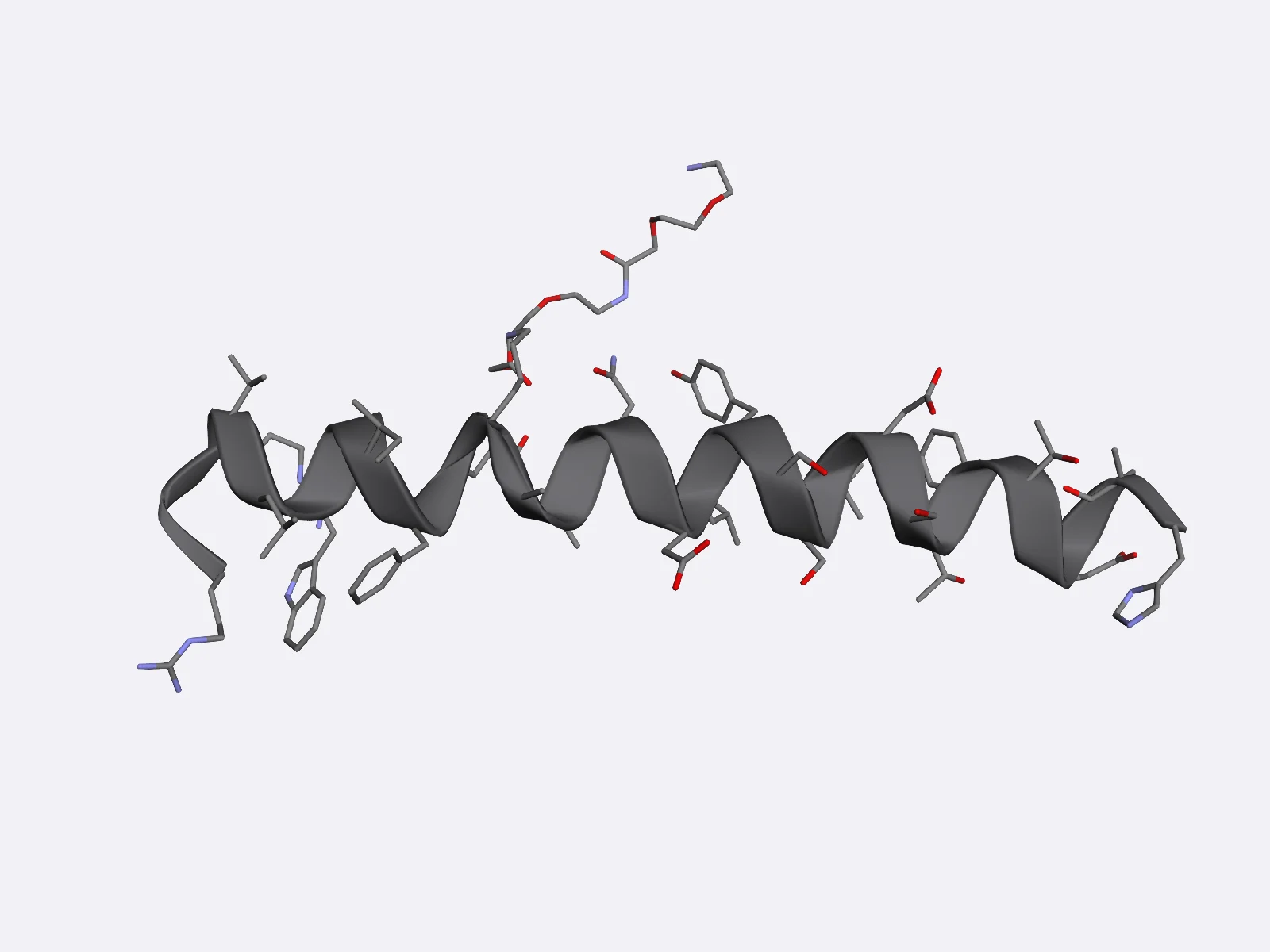
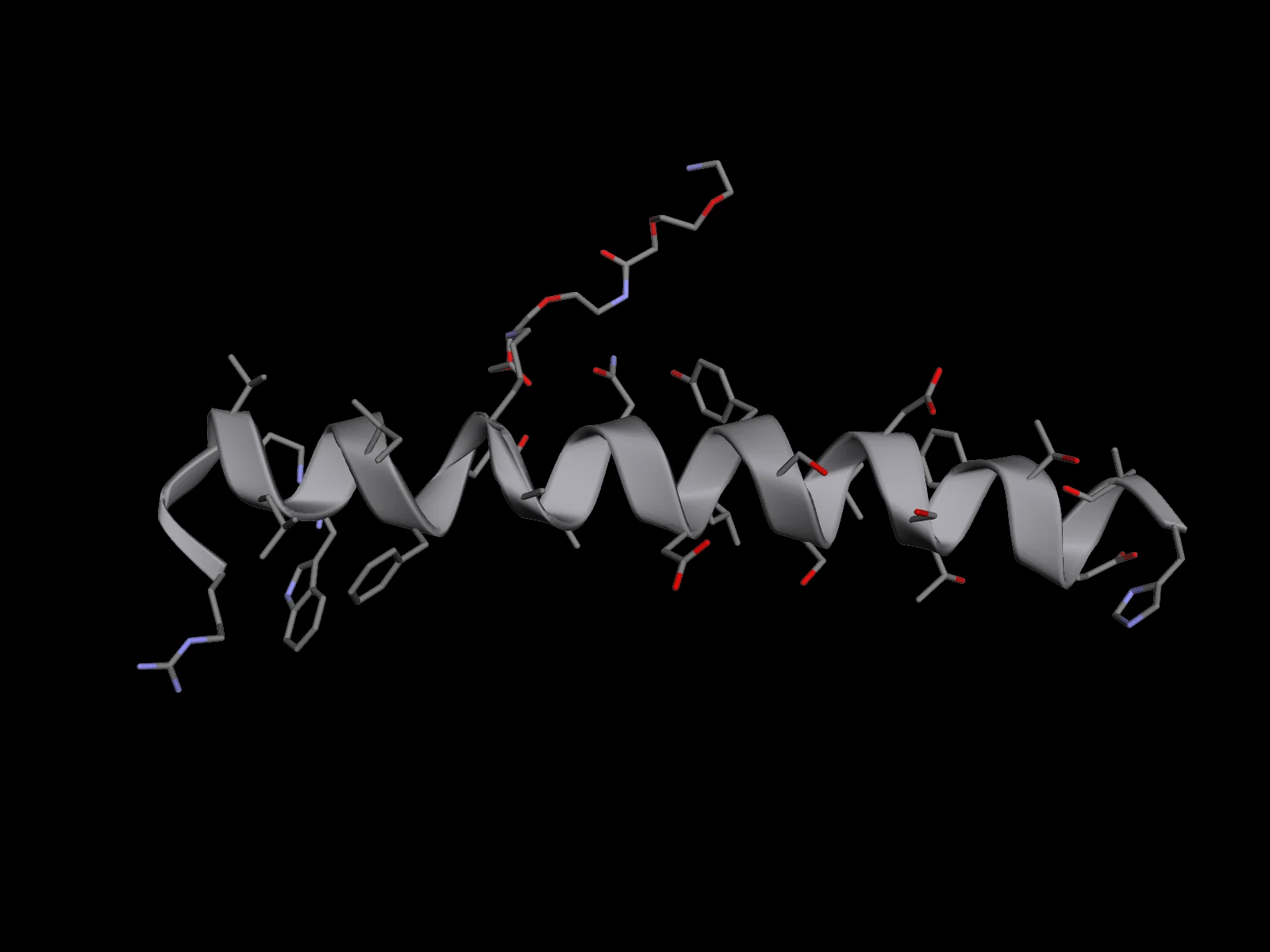
Sequence
HAEGTFTSDVSSYLEGQAAKEFIAWLVRGRG
GLP-1(7-37) backbone with Aib at position 8, an Arg substitution and a C18 diacid lipid on Lys26.
Reviewed 2 Nov 2026. Who checks this
Verdict
Semaglutide is a GLP-1 receptor agonist approved in the United States as Ozempic and Rybelsus for type 2 diabetes and as Wegovy for weight management and cardiovascular risk reduction.regulatory document, reference 1regulatory document, reference 2regulatory document, reference 3
In the STEP 1 trial, 1,961 adults with obesity and no diabetes lost a mean 14.9% of body weight over 68 weeks on 2.4 mg weekly, against 2.4% with placebo, alongside lifestyle intervention.human study, reference 4
In SELECT, 17,604 adults with cardiovascular disease and overweight or obesity but no diabetes had 20% fewer major cardiovascular events over about 40 months.human study, reference 5
Gastrointestinal effects are the most common adverse events, and more people stop treatment because of them than with placebo.human study, reference 6human study, reference 7
Evidence profile
given, controlledgiven, no controlmeasured, not givenregistered, no resultsanimal-only papers, √n
- Given to people
- 13
- With a control group
- 12
- Measured only
- 0
- Registered, no results
- 0
Given means people received Semaglutide in the study. Measured means the study only measured the Semaglutide a body already makes, which says nothing about what taking it does. The animal bar counts every PubMed paper on Semaglutide with no human subjects (277).
Human studies
Semaglutide has one of the largest trial programmes of any peptide drug. The studies below are a selection of the pivotal trials and recent syntheses, not a complete list.
What each study used is recorded as the study ran it, as research, not as a suggestion of what to take.
2025, randomized or controlled
1,407people
Randomized, double-blind phase 3b (STEP UP)
1,407 adults with obesity, without diabetes
- What the study used
- 7.2 mg, 2.4 mg or placebo once weekly for 72 weeks
- What it found
- Tested a higher dose than the approved 2.4 mg; completed in 2024.Reference 14
2024, no control group
Count not reported
Prespecified analysis of SELECT
SELECT participants
- What the study used
- 2.4 mg once weekly for up to 208 weeks
- What it found
- Weight loss of 10.2% versus 1.5% at four years, sustained across sexes, races and body sizes.Reference 15
2024, randomized or controlled
3,533people
Randomized, placebo-controlled kidney outcomes trial (FLOW)
3,533 adults with type 2 diabetes and chronic kidney disease
- What the study used
- 1.0 mg once weekly; median follow-up 3.4 years
- What it found
- Major kidney disease events 24% lower than placebo; the trial was stopped early for efficacy.Reference 16
2024, randomized or controlled
Count not reported
Pooled analysis of two randomized trials (STEP-HFpEF)
Adults with obesity-related heart failure with preserved ejection fraction, with and without diabetes
- What the study used
- 2.4 mg once weekly for 52 weeks
- What it found
- Improved heart-failure symptoms, physical limitations and body weight versus placebo.Reference 19
2023, randomized or controlled
17,604people
Randomized, double-blind, event-driven cardiovascular outcomes trial (SELECT)
17,604 adults aged 45 or over with cardiovascular disease and BMI of 27 or more, without diabetes
- What the study used
- 2.4 mg once weekly; mean exposure 34 months
- What it found
- Major cardiovascular events in 6.5% versus 8.0% (hazard ratio 0.80). Discontinuation for adverse events 16.6% versus 8.2%.Reference 5
2022, randomized or controlled
304people
Randomized, placebo-controlled phase 3 (STEP 5)
304 adults with overweight or obesity, without diabetes
- What the study used
- 2.4 mg once weekly for 104 weeks
- What it found
- Mean weight change −15.2% versus −2.6% at two years; gastrointestinal adverse events in 82% versus 54%.Reference 12
2022, randomized or controlled
338people
Randomized, open-label phase 3b (STEP 8)
338 adults with overweight or obesity, without diabetes
- What the study used
- Semaglutide 2.4 mg weekly versus liraglutide 3.0 mg daily for 68 weeks
- What it found
- A head-to-head comparison of the two GLP-1 drugs approved for weight management.Reference 13
2021, randomized or controlled
1,961people
Randomized, double-blind, placebo-controlled phase 3 (STEP 1)
1,961 adults with obesity, or overweight with a weight-related condition, without diabetes
- What the study used
- 2.4 mg once weekly by subcutaneous injection for 68 weeks, plus lifestyle intervention
- What it found
- Mean weight change −14.9% versus −2.4% with placebo; 86% versus 32% lost at least 5%.Reference 4
2021, randomized or controlled
1,210people
Randomized, double-blind phase 3 (STEP 2)
1,210 adults with overweight or obesity and type 2 diabetes
- What the study used
- 2.4 mg or 1.0 mg once weekly for 68 weeks, versus placebo
- What it found
- Tested 2.4 mg against the 1.0 mg diabetes dose and placebo for weight management.Reference 10
2021, randomized or controlled
803people
Randomized withdrawal trial (STEP 4)
803 adults who had reached 2.4 mg weekly after a 20-week run-in
- What the study used
- Continued 2.4 mg weekly or switched to placebo for 48 weeks
- What it found
- Designed to measure weight maintenance after stopping; those switched to placebo regained weight.Reference 11
2019, randomized or controlled
Count not reported
Randomized, double-blind phase 3a (PIONEER 4)
Adults with type 2 diabetes on metformin
- What the study used
- Oral semaglutide escalated to 14 mg daily, versus liraglutide 1.8 mg daily and placebo, for 52 weeks
- What it found
- Compared the oral tablet with an injected GLP-1 drug on HbA1c and weight.Reference 18
2017, randomized or controlled
Count not reported
Randomized, double-blind phase 3a (SUSTAIN 1)
Treatment-naive adults with type 2 diabetes
- What the study used
- 0.5 mg or 1.0 mg once weekly for 30 weeks, versus placebo
- What it found
- The first phase 3 monotherapy trial, measuring change in HbA1c.Reference 17
2016, randomized or controlled
3,297people
Randomized, placebo-controlled cardiovascular outcomes trial (SUSTAIN-6)
3,297 adults with type 2 diabetes
- What the study used
- 0.5 mg or 1.0 mg once weekly for 104 weeks
- What it found
- Cardiovascular events 6.6% versus 8.9%; fewer kidney events but more retinopathy complications than placebo.Reference 8
Safety
Across 16 phase 3a trials in type 2 diabetes, gastrointestinal disorders were reported by about 42% of people on injected semaglutide and 39% on the oral form, against 22% to 25% with comparators, mostly during dose escalation.human study, reference 6
Gallstone disease was more common than with placebo in those programmes and in SELECT; rates of pancreatitis, kidney disorders and cancers were similar to comparators.human study, reference 6human study, reference 7
In SELECT, serious adverse events were less frequent with semaglutide than placebo, while discontinuation for adverse events was twice as frequent, driven by gastrointestinal effects. Suicide or self-injury events were rare and balanced.human study, reference 7
A 2025 meta-analysis of 78 trials found no increase in eye disorders or diabetic retinopathy overall, while SUSTAIN-6 had reported more retinopathy complications in people with diabetes.review, reference 20human study, reference 8
A 2023 systematic review of 37 randomized trials and 19 real-world studies found no increase in pancreatic, thyroid or other cancers versus placebo or active comparators.review, reference 21
In a meta-analysis of four trials in people without diabetes, gastrointestinal adverse events were 1.6 times more likely and discontinuation for adverse events about twice as likely as with placebo.review, reference 22
Regulatory
- FDA
- Approved2017
Approved as Ozempic (injection, 2017), Rybelsus (tablets, 2019), Wegovy (injection, 2021) and Wegovy tablets (2025).
- 503A compounding
- Not listed
A component of approved drugs, so not on the 503A bulk substance lists. The FDA declared the shortage resolved in February 2025 and states that its compounding enforcement discretion has ended.
- EU (EMA)
- Authorised
Authorised as Ozempic, Rybelsus and Wegovy.
- WADA
- Monitoring
Not prohibited. On the 2026 Monitoring Program.
Checked 2 Nov 2026. Status can change month to month, so each page shows its own date.
Animal and cell
Because semaglutide is an approved drug with large human trials, this page does not summarise its animal studies. The regulatory labels describe the preclinical findings, including thyroid C-cell tumours in rodents that underlie the boxed warning.regulatory document, reference 2regulatory document, reference 1
How it might work
Mechanism sits after the evidence on purpose. A plausible pathway is not a result in people.
Semaglutide is a GLP-1 analogue engineered for a half-life of about one week, which allows once-weekly injection; an oral tablet form uses an absorption enhancer.human study, reference 8review, reference 9
Exposure rises with dose for both injected and oral forms; food, water volume and dosing schedule affect oral absorption, and no dose adjustment is needed for kidney or liver impairment.review, reference 9
Questions
- What happens to weight after stopping?
In STEP 4, people switched to placebo after 20 weeks regained weight over the following 48 weeks, while those who continued kept losing. In STEP 1's extension, most of the lost weight returned within a year of stopping.human study, reference 11
- Does it help the heart in people without diabetes?
SELECT showed 20% fewer major cardiovascular events over about 40 months in adults with existing cardiovascular disease and overweight or obesity but no diabetes.human study, reference 5
- What are the most common side effects?
Nausea, vomiting, diarrhoea and constipation, mostly while the dose is being increased. Gallstone disease is also more frequent than with placebo.human study, reference 6human study, reference 7
References
22 sources. Each was resolved by script against PubMed, ClinicalTrials.gov or the regulator on 19 Nov 2026, checked for a retraction notice, and checked that its record names Semaglutide. None retracted. Nothing is typed by hand.
- 1
- 2
- 3
- 4Once-Weekly Semaglutide in Adults with Overweight or Obesity.
Wilding, Batterham, Calanna et al. N Engl J Med, 2021
Human study, randomized controlled trialPMID 33567185
- 5Semaglutide and Cardiovascular Outcomes in Obesity without Diabetes.
Lincoff, Brown-Frandsen, Colhoun et al. N Engl J Med, 2023
Human study, randomized controlled trialPMID 37952131
- 6Safety and tolerability of semaglutide across the SUSTAIN and PIONEER phase IIIa clinical trial programmes.
Aroda, Erhan, Jelnes et al. Diabetes Obes Metab, 2023
Human study, journal articlePMID 36700417
- 7Safety profile of semaglutide versus placebo in the SELECT study: a randomized controlled trial.
Kushner, Ryan, Deanfield et al. Obesity (Silver Spring), 2025
Human study, randomized controlled trialPMID 39948761
- 8Semaglutide and Cardiovascular Outcomes in Patients with Type 2 Diabetes.
Marso, Bain, Consoli et al. N Engl J Med, 2016
Human study, randomized controlled trialPMID 27633186
- 9Clinical Pharmacokinetics of Semaglutide: A Systematic Review.
Yang, Yang. Drug Des Devel Ther, 2024
Review, systematic reviewPMID 38952487
- 10Semaglutide 2·4 mg once a week in adults with overweight or obesity, and type 2 diabetes (STEP 2): a randomised, double-blind, double-dummy, placebo-controlled, phase 3 trial.
Davies, Færch, Jeppesen et al. Lancet, 2021
Human study, randomized controlled trialPMID 33667417
- 11Effect of Continued Weekly Subcutaneous Semaglutide vs Placebo on Weight Loss Maintenance in Adults With Overweight or Obesity: The STEP 4 Randomized Clinical Trial.
Rubino, Abrahamsson, Davies et al. JAMA, 2021
Human study, randomized controlled trialPMID 33755728
- 12Two-year effects of semaglutide in adults with overweight or obesity: the STEP 5 trial.
Garvey, Batterham, Bhatta et al. Nat Med, 2022
Human study, randomized controlled trialPMID 36216945
- 13Effect of Weekly Subcutaneous Semaglutide vs Daily Liraglutide on Body Weight in Adults With Overweight or Obesity Without Diabetes: The STEP 8 Randomized Clinical Trial.
Rubino, Greenway, Khalid et al. JAMA, 2022
Human study, randomized controlled trialPMID 35015037
- 14Once-weekly semaglutide 7·2 mg in adults with obesity (STEP UP): a randomised, controlled, phase 3b trial.
Wharton, Freitas, Hjelmesæth et al. Lancet Diabetes Endocrinol, 2025
Human study, randomized controlled trialPMID 40961952
- 15Long-term weight loss effects of semaglutide in obesity without diabetes in the SELECT trial.
Ryan, Lingvay, Deanfield et al. Nat Med, 2024
Human study, randomized controlled trialPMID 38740993
- 16Effects of Semaglutide on Chronic Kidney Disease in Patients with Type 2 Diabetes.
Perkovic, Tuttle, Rossing et al. N Engl J Med, 2024
Human study, randomized controlled trialPMID 38785209
- 17Efficacy and safety of once-weekly semaglutide monotherapy versus placebo in patients with type 2 diabetes (SUSTAIN 1): a double-blind, randomised, placebo-controlled, parallel-group, multinational, multicentre phase 3a trial.
Sorli, Harashima, Tsoukas et al. Lancet Diabetes Endocrinol, 2017
Human study, randomized controlled trialPMID 28110911
- 18Oral semaglutide versus subcutaneous liraglutide and placebo in type 2 diabetes (PIONEER 4): a randomised, double-blind, phase 3a trial.
Pratley, Amod, Hoff et al. Lancet, 2019
Human study, randomized controlled trialPMID 31186120
- 19Semaglutide versus placebo in people with obesity-related heart failure with preserved ejection fraction: a pooled analysis of the STEP-HFpEF and STEP-HFpEF DM randomised trials.
Butler, Shah, Petrie et al. Lancet, 2024
Human study, randomized controlled trialPMID 38599221
- 20Ocular Adverse Events With Semaglutide: A Systematic Review and Meta-Analysis.
Natividade, Spiazzi, Baumgarten et al. JAMA Ophthalmol, 2025
Review, systematic review and meta-analysisPMID 40810985
- 21Semaglutide and cancer: A systematic review and meta-analysis.
Nagendra, Bg, Sharma et al. Diabetes Metab Syndr, 2023
Review, systematic review and meta-analysisPMID 37531876
- 22Efficacy and Safety of Semaglutide for Weight Loss in Obesity Without Diabetes: A Systematic Review and Meta-Analysis.
Tan, Dampil, Marquez. J ASEAN Fed Endocr Soc, 2022
Review, systematic review and meta-analysisPMID 36578889