Tirzepatide
An approved dual GIP and GLP-1 receptor agonist with a large trial programme.
Evidence grade A: Human trial data14 reports, 26,214 people
- FDA
- Approved2022
- 503A compounding
- Not listed
- EU (EMA)
- Authorised2022
- WADA
- Monitoring
Checked 2 Nov 2026. What each status means
This page lists no doses and links to no sellers. Studies are described as they were run. Why we leave doses out. The tracker records what you already do.
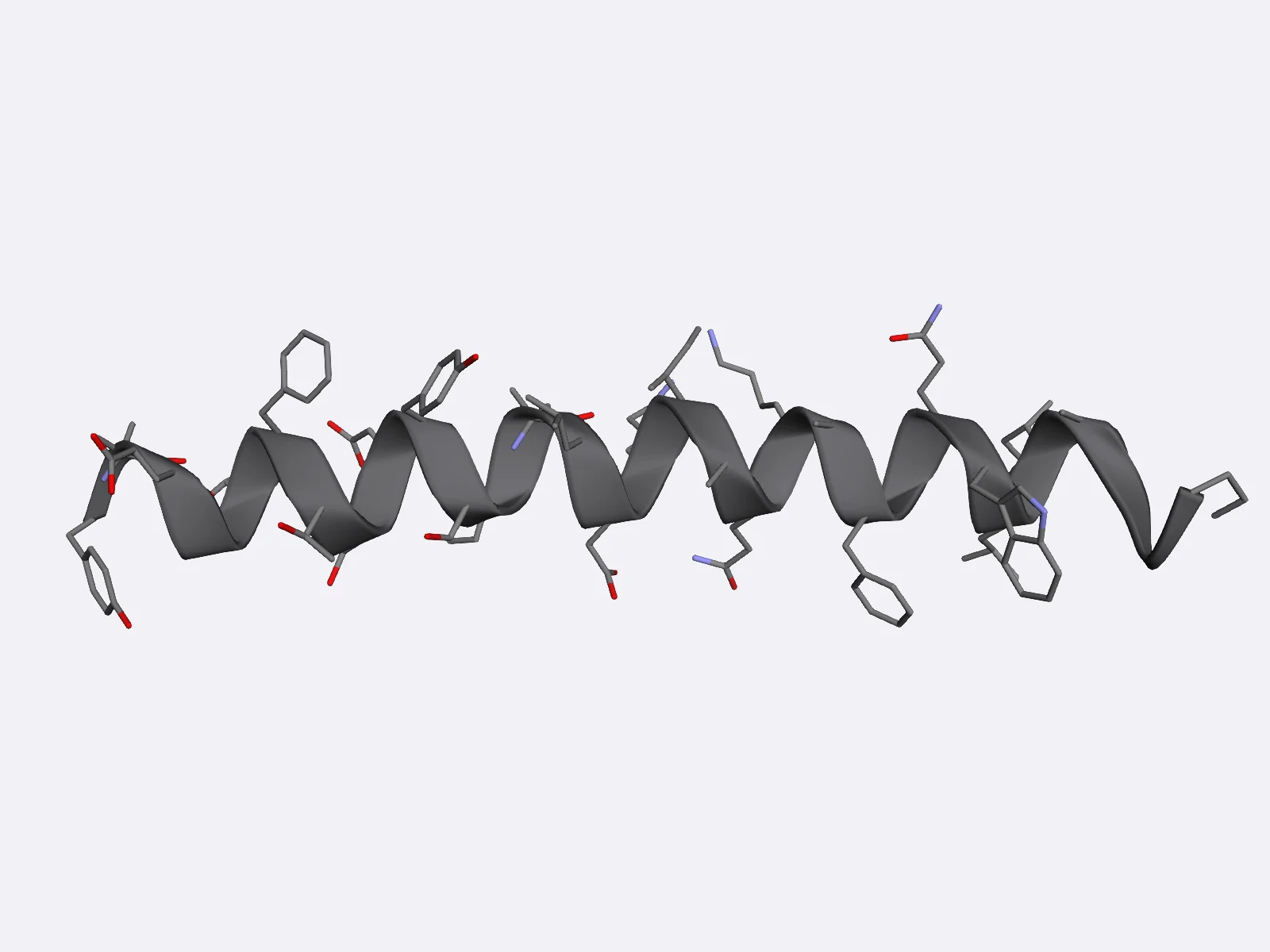
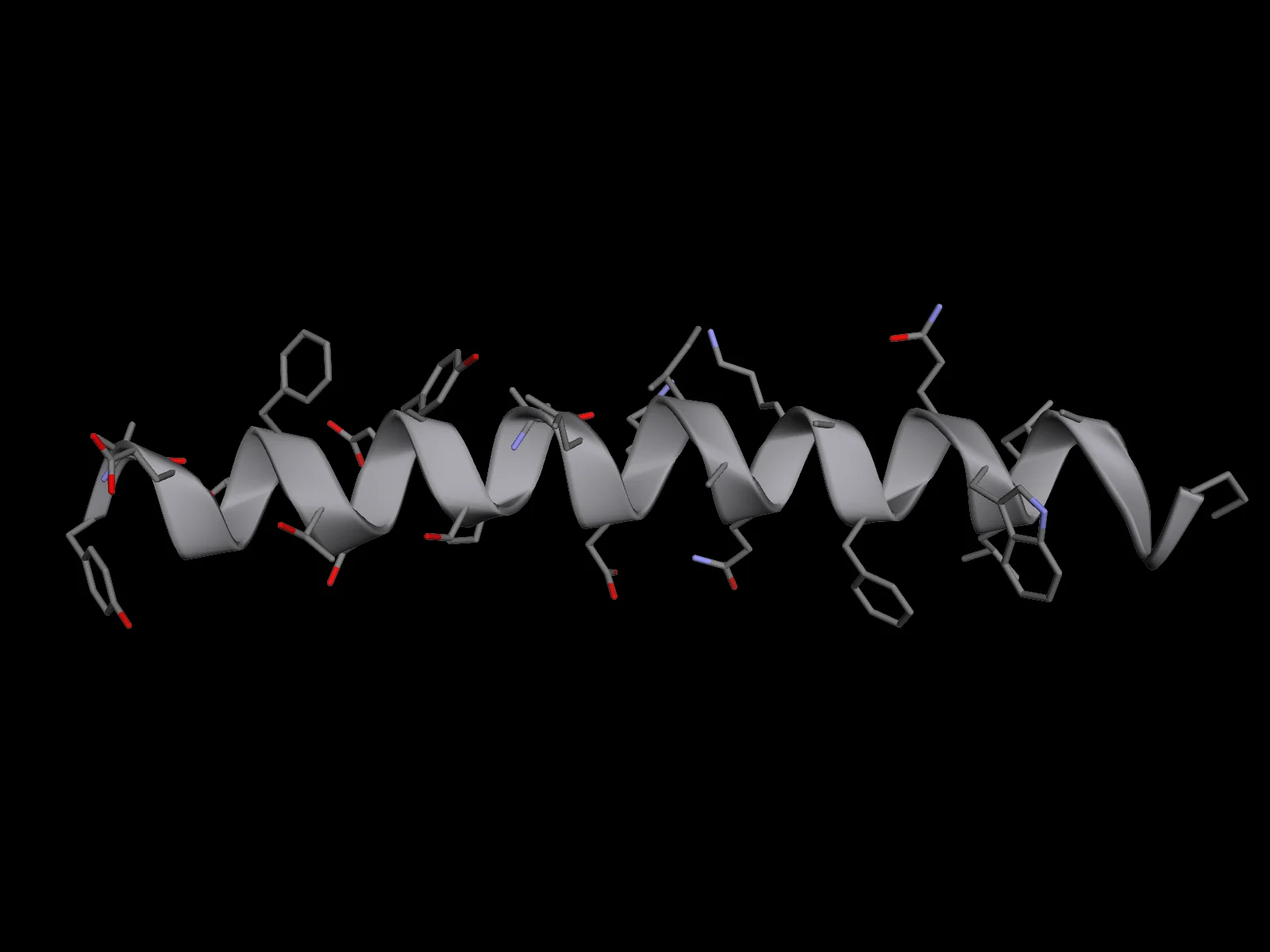
Sequence
YAEGTFTSDYSIALDKIAQKAFVQWLIAGGPSSGAPPPS
39-residue backbone with two Aib residues and a C20 diacid lipid on Lys20.
Reviewed 19 Nov 2026. Who checks this
Verdict
Tirzepatide is a dual GIP and GLP-1 receptor agonist approved in the United States as Mounjaro for type 2 diabetes and as Zepbound for weight management and for obstructive sleep apnoea in adults with obesity.regulatory document, reference 1regulatory document, reference 2regulatory document, reference 3
The Mounjaro label was extended in December 2025 to children 10 years and older with type 2 diabetes, and in August 2026 to reducing the risk of major cardiovascular events (cardiovascular death, non-fatal heart attack or non-fatal stroke) in adults with type 2 diabetes at high risk of them.regulatory document, reference 1
In the SURMOUNT-1 trial, 2,539 adults with obesity, or overweight with a weight-related complication, and no diabetes had a mean weight change of −15.0%, −19.5% and −20.9% on the three tirzepatide arms over 72 weeks, against −3.1% with placebo.human study, reference 4
In the SURPASS trials in adults with type 2 diabetes, tirzepatide lowered HbA1c more than placebo, semaglutide 1 mg, insulin degludec and insulin glargine.human study, reference 5human study, reference 6human study, reference 7human study, reference 8
In SURPASS-CVOT, 13,299 adults with type 2 diabetes and atherosclerotic cardiovascular disease were randomized to tirzepatide or dulaglutide; major cardiovascular events occurred in 12.2% versus 13.1%, which met the trial's test for noninferiority but not for superiority.human study, reference 9
Gastrointestinal effects are the most common adverse events, mostly during dose escalation, and more people stopped treatment because of adverse events than with placebo.human study, reference 4review, reference 10
Evidence profile
given, controlledgiven, no controlmeasured, not givenregistered, no resultsanimal-only papers, √n
- Given to people
- 14
- With a control group
- 14
- Measured only
- 0
- Registered, no results
- 1
Given means people received Tirzepatide in the study. Measured means the study only measured the Tirzepatide a body already makes, which says nothing about what taking it does. The animal bar counts every PubMed paper on Tirzepatide with no human subjects (78).
Human studies
Tirzepatide has a large trial programme: SURPASS in type 2 diabetes and SURMOUNT in obesity, plus trials in sleep apnoea and heart failure. The studies below are a selection of the dose-ranging trial, the pivotal trials and the outcome trials, not a complete list. Most were funded by the manufacturer, as their publications state.
What each study used is recorded as the study ran it, as research, not as a suggestion of what to take.
2025, randomized or controlled
13,299people
Randomized, double-blind, active-controlled cardiovascular outcomes trial (SURPASS-CVOT)
13,299 adults with type 2 diabetes and atherosclerotic cardiovascular disease (13,165 analysed)
- What the study used
- Up to 15 mg by subcutaneous injection once weekly, versus dulaglutide 1.5 mg once weekly; follow-up length not given in the abstract
- What it found
- Cardiovascular death, heart attack or stroke in 12.2% versus 13.1% (hazard ratio 0.92); noninferior to dulaglutide, superiority not shown. More gastrointestinal adverse events with tirzepatide.Reference 9
2025, randomized or controlled
751people
Randomized, open-label phase 3b (SURMOUNT-5)
751 adults with obesity without type 2 diabetes
- What the study used
- Maximum tolerated tirzepatide (10 or 15 mg) versus maximum tolerated semaglutide (1.7 or 2.4 mg), subcutaneously once weekly for 72 weeks
- What it found
- Mean weight change −20.2% with tirzepatide versus −13.7% with semaglutide.Reference 22
2025, randomized or controlled
731people
Randomized, double-blind, placebo-controlled trial (SUMMIT)
731 adults with heart failure with preserved ejection fraction and BMI of 30 or more
- What the study used
- Up to 15 mg by subcutaneous injection once weekly for at least 52 weeks; median follow-up 104 weeks
- What it found
- Cardiovascular death or worsening heart failure in 9.9% versus 15.3% (hazard ratio 0.62). Stopping for adverse events 6.3% versus 1.4%.Reference 24
2024, randomized or controlled
783people
Randomized withdrawal phase 3 trial (SURMOUNT-4)
783 adults with obesity or overweight without diabetes in the lead-in; 670 randomized
- What the study used
- Maximum tolerated dose (10 or 15 mg) by subcutaneous injection once weekly, open label for 36 weeks, then continued or switched to placebo for 52 weeks
- What it found
- After a mean 20.9% loss in the lead-in, weight changed by −5.5% with continued tirzepatide and +14.0% after switching to placebo.Reference 21
2024, randomized or controlled
Count not reported
Two randomized, double-blind, placebo-controlled phase 3 trials (SURMOUNT-OSA)
Adults with moderate-to-severe obstructive sleep apnoea and obesity, one trial without and one with positive airway pressure therapy
- What the study used
- Maximum tolerated dose (10 or 15 mg) for 52 weeks, versus placebo
- What it found
- The apnoea-hypopnoea index fell by 25.3 and 29.3 events per hour, against 5.3 and 5.5 with placebo.Reference 23
2023, randomized or controlled
938people
Randomized, double-blind, placebo-controlled phase 3 (SURMOUNT-2)
938 adults with BMI of 27 or more and type 2 diabetes
- What the study used
- 10 or 15 mg by subcutaneous injection once weekly for 72 weeks, versus placebo
- What it found
- Mean weight change −12.8% and −14.7% versus −3.2% with placebo; fewer than 5% stopped because of gastrointestinal events.Reference 19
2023, randomized or controlled
579people
Randomized, double-blind, placebo-controlled phase 3 (SURMOUNT-3)
579 adults with obesity or overweight and a complication, without diabetes, who had lost at least 5% of weight in a 12-week intensive lifestyle programme
- What the study used
- Maximum tolerated dose (10 or 15 mg) once weekly for 72 weeks, versus placebo
- What it found
- Additional weight change after the lifestyle programme of −18.4% versus +2.5% with placebo.Reference 20
2022, randomized or controlled
475people
Randomized, double-blind, placebo-controlled phase 3 (SURPASS-5)
475 adults with type 2 diabetes on insulin glargine, with or without metformin
- What the study used
- 5, 10 or 15 mg by subcutaneous injection once weekly for 40 weeks, added to insulin glargine, versus placebo
- What it found
- HbA1c fell by 2.11% to 2.40% versus 0.86% with placebo. Treatment was stopped early by 10% to 18% on tirzepatide and 3% on placebo.Reference 18
2022, randomized or controlled
2,539people
Randomized, double-blind, placebo-controlled phase 3 (SURMOUNT-1)
2,539 adults with obesity, or overweight with a weight-related complication, without diabetes
- What the study used
- 5, 10 or 15 mg by subcutaneous injection once weekly for 72 weeks, including a 20-week dose-escalation period
- What it found
- Mean weight change −15.0%, −19.5% and −20.9% versus −3.1% with placebo. Adverse events led to stopping treatment in 4.3% to 7.1% versus 2.6%.Reference 4
2021, randomized or controlled
478people
Randomized, double-blind, placebo-controlled phase 3 (SURPASS-1)
478 adults with type 2 diabetes managed with diet and exercise alone, not previously on injectable diabetes treatment
- What the study used
- 5, 10 or 15 mg once a week for 40 weeks, versus placebo
- What it found
- HbA1c fell by 1.87% to 2.07% versus a rise of 0.04% with placebo; weight fell by 7.0 to 9.5 kg. No clinically significant or severe hypoglycaemia was reported with tirzepatide.Reference 5
2021, randomized or controlled
1,879people
Randomized, open-label phase 3 (SURPASS-2)
1,879 adults with type 2 diabetes
- What the study used
- 5, 10 or 15 mg once weekly for 40 weeks, versus semaglutide 1 mg once weekly
- What it found
- HbA1c fell by 2.01 to 2.30 percentage points versus 1.86 with semaglutide; all tirzepatide arms were noninferior and superior. Serious adverse events in 5% to 7% versus 3%.Reference 6
2021, randomized or controlled
1,444people
Randomized, open-label phase 3 (SURPASS-3)
1,444 insulin-naive adults with type 2 diabetes on metformin, with or without an SGLT2 inhibitor
- What the study used
- 5, 10 or 15 mg by subcutaneous injection once weekly for 52 weeks, versus titrated daily insulin degludec
- What it found
- HbA1c fell by 1.93% to 2.37% versus 1.34% with insulin degludec. Weight fell by 7.5 to 12.9 kg, against a gain of 2.3 kg with insulin degludec.Reference 7
2021, randomized or controlled
2,002people
Randomized, open-label phase 3 (SURPASS-4)
2,002 adults with type 2 diabetes and established cardiovascular disease or high cardiovascular risk
- What the study used
- 5, 10 or 15 mg by subcutaneous injection once weekly for at least 52 and up to 104 weeks, versus titrated insulin glargine
- What it found
- HbA1c fell by 2.43% and 2.58% on 10 and 15 mg versus 1.44% with glargine. Cardiovascular events were not increased (hazard ratio 0.74, 95% CI 0.51 to 1.08).Reference 8
2018, randomized or controlled
316people
Randomized, double-blind, placebo- and active-controlled phase 2 dose-ranging trial
316 adults with type 2 diabetes on diet and exercise alone or with metformin
- What the study used
- 1, 5, 10 or 15 mg (as LY3298176) by subcutaneous injection once weekly for 26 weeks, versus dulaglutide 1.5 mg or placebo
- What it found
- HbA1c fell by 1.06% to 1.94% across the tirzepatide arms, against 0.06% with placebo and 1.21% with dulaglutide. Gastrointestinal events rose with dose, from 23.1% to 66.0%.Reference 17
Registered, no results
2022, registered, no results
15,374people
Randomized, double-blind, placebo-controlled phase 3 outcomes trial (SURMOUNT-MMO), registered
15,374 adults with obesity enrolled
- What the study used
- Tirzepatide; regimen per protocol
- What it found
- Active, not recruiting as of November 2026; primary completion estimated October 2027. No results posted.Reference 25
What the studies used
The amounts below are what each study gave, as its authors report them. They describe research on specific groups of people under supervision. They are not a dose for anyone to take.
Frias, 2018
- Who
- 316 adults with type 2 diabetes (aged 18 to 75, BMI 23 to 50) on diet and exercise alone or with metformin
- Given, as reported
- 1 mg, 5 mg, 10 mg or 15 mg of LY3298176 (tirzepatide) by subcutaneous injection once weekly; comparators were dulaglutide 1.5 mg and placebo
- For
- 26 weeks
- Result
- HbA1c changed by −1.06%, −1.73%, −1.89% and −1.94% versus −0.06% with placebo and −1.21% with dulaglutide. Gastrointestinal events occurred in 23.1% to 66.0% across the tirzepatide arms, 42.6% with dulaglutide and 9.8% with placebo.17
Rosenstock, 2021
- Who
- 478 adults with type 2 diabetes inadequately controlled by diet and exercise, naive to injectable diabetes therapy (SURPASS-1)
- Given, as reported
- 5, 10 or 15 mg once a week, versus placebo (route not stated in the abstract)
- For
- 40 weeks
- Result
- HbA1c fell by 1.87%, 1.89% and 2.07% versus a rise of 0.04% with placebo; body weight fell by 7.0 to 9.5 kg. Nausea in 12% to 18% versus 6%.5
Frías, 2021
- Who
- 1,879 adults with type 2 diabetes (SURPASS-2)
- Given, as reported
- 5 mg, 10 mg or 15 mg once weekly, versus semaglutide 1 mg once weekly (route not stated in the abstract)
- For
- 40 weeks
- Result
- HbA1c fell by 2.01, 2.24 and 2.30 percentage points versus 1.86 with semaglutide; weight reductions were 1.9 to 5.5 kg greater than with semaglutide. Nausea in 17% to 22% versus 18%.6
Ludvik, 2021
- Who
- 1,444 insulin-naive adults with type 2 diabetes on metformin, with or without an SGLT2 inhibitor (SURPASS-3)
- Given, as reported
- 5, 10 or 15 mg by subcutaneous injection once weekly, started at 2.5 mg and escalated by 2.5 mg every 4 weeks until the assigned dose was reached; comparator was once-daily titrated insulin degludec
- For
- 52 weeks
- Result
- HbA1c fell by 1.93%, 2.20% and 2.37% versus 1.34% with insulin degludec; weight changed by −7.5 to −12.9 kg versus +2.3 kg. Stopping for adverse events was more common on tirzepatide.7
Dahl, 2022
- Who
- 475 adults with type 2 diabetes on once-daily insulin glargine, with or without metformin (SURPASS-5)
- Given, as reported
- 5, 10 or 15 mg by subcutaneous injection once weekly, initiated at 2.5 mg per week and escalated by 2.5 mg every 4 weeks until the assigned dose was achieved; versus volume-matched placebo
- For
- 40 weeks
- Result
- HbA1c fell by 2.11%, 2.40% and 2.34% versus 0.86% with placebo; weight changed by −5.4, −7.5 and −8.8 kg versus +1.6 kg. Treatment was stopped early by 10%, 12% and 18% versus 3%.18
Jastreboff, 2022
- Who
- 2,539 adults with BMI of 30 or more, or 27 or more with a weight-related complication, without diabetes (SURMOUNT-1)
- Given, as reported
- 5 mg, 10 mg or 15 mg by subcutaneous injection once weekly, including a 20-week dose-escalation period; versus placebo
- For
- 72 weeks
- Result
- Mean weight change −15.0%, −19.5% and −20.9% versus −3.1% with placebo. Adverse events led to stopping treatment in 4.3%, 7.1% and 6.2% versus 2.6%.4
Garvey, 2023
- Who
- 938 adults with BMI of 27 or more and type 2 diabetes with HbA1c of 7% to 10% (SURMOUNT-2)
- Given, as reported
- 10 mg or 15 mg by subcutaneous injection once weekly, versus placebo
- For
- 72 weeks
- Result
- Mean weight change −12.8% and −14.7% versus −3.2% with placebo. Gastrointestinal events were the most frequent adverse events; fewer than 5% stopped because of them.19
Malhotra, 2024
- Who
- Adults with moderate-to-severe obstructive sleep apnoea and obesity, in two trials: without and with positive airway pressure therapy (SURMOUNT-OSA)
- Given, as reported
- Maximum tolerated dose of 10 mg or 15 mg, versus placebo (route and frequency not stated in the abstract)
- For
- 52 weeks
- Result
- Apnoea-hypopnoea index changed by −25.3 and −29.3 events per hour versus −5.3 and −5.5 with placebo. Gastrointestinal events were the most frequent adverse events.23
If you track something you have been given, the reconstitution calculator turns an amount you enter into syringe units. It does not suggest an amount.
Safety
Gastrointestinal events (nausea, diarrhoea, vomiting) were the most common adverse events across the trials, mostly mild to moderate and mostly during dose escalation; in the phase 2 trial they rose with dose, from 23.1% at 1 mg to 66.0% at 15 mg, against 9.8% with placebo.human study, reference 17human study, reference 4human study, reference 8
A 2022 meta-analysis of seven trials in type 2 diabetes found that tirzepatide did not increase hypoglycaemia compared with placebo and caused less than basal insulin, while the 15 mg arms had more discontinuations for adverse events regardless of comparator; serious adverse events and deaths were not increased.review, reference 10
Meta-analyses of randomized trials have linked tirzepatide with more gallbladder or biliary disease than control treatments, while finding acute pancreatitis rare (0.22% across 19 trials) and not clearly increased.review, reference 31review, reference 32review, reference 33
The US prescribing information for Mounjaro and Zepbound carries a boxed warning that tirzepatide causes thyroid C-cell tumours in rats, that it is unknown whether it causes such tumours, including medullary thyroid carcinoma, in humans, and that it is contraindicated in people with a personal or family history of medullary thyroid carcinoma or with MEN 2.regulatory document, reference 1regulatory document, reference 2
A 2025 meta-analysis of 13 trials with 13,761 participants, lasting 26 to 72 weeks, found no increase in overall or specific cancers with tirzepatide; calcitonin rose more on 10 and 15 mg than on placebo, and no papillary thyroid carcinoma was reported.review, reference 34
Regulatory
- FDA
- Approved2022
Approved as Mounjaro (injection, type 2 diabetes, 2022; extended to children 10 and older in December 2025 and to cardiovascular risk reduction in adults with type 2 diabetes in August 2026) and Zepbound (injection, weight management, 2023). Zepbound is also approved for obstructive sleep apnoea in adults with obesity.
- 503A compounding
- Not listed
A component of approved drugs, so not on the 503A bulk substance lists. The FDA declared the tirzepatide injection shortage resolved in October 2024, re-issued that decision in December 2024, and states that its 503A compounding enforcement discretion has ended. In April 2026 the FDA proposed excluding tirzepatide from the 503B bulks list.
- EU (EMA)
- Authorised2022
Authorised as Mounjaro (2022).
- WADA
- Monitoring
Not prohibited. On the 2026 Monitoring Program.
Checked 2 Nov 2026. Status can change month to month, so each page shows its own date.
Animal and cell
Because tirzepatide is an approved drug with large human trials, this page summarises only a few animal studies. In obese mice, tirzepatide improved insulin sensitivity more than GLP-1 receptor activation alone, and still did so in mice lacking the GLP-1 receptor, which the authors attribute to GIP receptor action in fat tissue.animal study, reference 26
In rats and shrews, GIP receptor activation blocked vomiting and other signs of malaise caused by GLP-1 receptor activation, and tirzepatide caused fewer such effects than equipotent doses of semaglutide. In human trials, gastrointestinal events were still the most common adverse events with tirzepatide.animal study, reference 27human study, reference 4
In two mouse models of Alzheimer's disease, tirzepatide and semaglutide lowered body weight and improved glucose tolerance but did not change amyloid plaques, brain inflammation markers or behavioural test results.animal study, reference 28
In rodents, tirzepatide reduced voluntary alcohol drinking and relapse-like drinking; a phase 2 placebo-controlled trial in adults with alcohol use disorder and overweight or obesity is registered and recruiting.animal study, reference 29registered trial, reference 30
How it might work
Mechanism sits after the evidence on purpose. A plausible pathway is not a result in people.
The Mounjaro prescribing information gives an elimination half-life of approximately 5 days.regulatory document, reference 1
Tirzepatide is a fatty-acid-modified peptide that activates both the GIP and GLP-1 receptors and was designed for once-weekly injection; in phase 1 studies in healthy people and people with type 2 diabetes, its pharmacokinetic profile was consistent with once-weekly administration.human and animal, reference 11
In cell and mouse studies, tirzepatide engaged the GIP receptor more than the GLP-1 receptor and, at the GLP-1 receptor, favoured one signalling pathway (cAMP) over another (β-arrestin recruitment); cryo-electron microscopy has resolved its structure bound to both receptors. Whether these properties explain its effects in people is not established.animal study, reference 12human study, reference 13
In a 4-week phase 1 study, a single dose of tirzepatide delayed gastric emptying in people with and without type 2 diabetes, and the effect diminished after repeated doses in healthy participants while a residual delay remained in those with diabetes, a pattern the authors describe as comparable to GLP-1 receptor agonists.animal study, reference 14
In a 28-week randomized study in people with type 2 diabetes, tirzepatide and semaglutide both reduced appetite compared with placebo, and tirzepatide reduced body weight and fat mass more than semaglutide; in a separate phase 1 trial in people with obesity, tirzepatide increased fat oxidation but did not appear to change metabolic adaptation.human study, reference 15human and animal, reference 16
Questions
- What happens to weight after stopping?
In SURMOUNT-4, adults who had lost a mean 20.9% over 36 weeks and were then switched to placebo regained weight (+14.0% over the next 52 weeks), while those who continued lost a further 5.5%.human study, reference 21
- How does it compare with semaglutide?
In SURMOUNT-5, adults with obesity and no type 2 diabetes lost a mean 20.2% of body weight on tirzepatide and 13.7% on semaglutide over 72 weeks. In SURPASS-2, in type 2 diabetes, tirzepatide lowered HbA1c and weight more than semaglutide 1 mg. Both trials were open label and funded by Eli Lilly.human study, reference 22human study, reference 6
- Does it affect heart outcomes?
In SUMMIT, adults with obesity and heart failure with preserved ejection fraction had fewer cardiovascular deaths or worsening heart-failure events than with placebo (9.9% versus 15.3%), mainly reflecting fewer worsening heart-failure events (8.0% versus 14.2%); cardiovascular deaths alone were few (2.2% versus 1.4%) and not significantly different. In SURPASS-CVOT, in type 2 diabetes, it was noninferior to dulaglutide for major cardiovascular events.human study, reference 24human study, reference 9
- Does it lower the chance of developing type 2 diabetes?
In the 1,032 SURMOUNT-1 participants who also had prediabetes, 1.3% on tirzepatide versus 13.3% on placebo were diagnosed with type 2 diabetes over 176 weeks; 17 weeks after stopping, the figures were 2.4% versus 13.7%.human study, reference 35
References
35 sources. Each was resolved by script against PubMed, ClinicalTrials.gov or the regulator on 19 Nov 2026, checked for a retraction notice, and checked that its record names Tirzepatide. None retracted. Nothing is typed by hand.
- 1
- 2
- 3
- 4Tirzepatide Once Weekly for the Treatment of Obesity.
Jastreboff, Aronne, Ahmad et al. N Engl J Med, 2022
Human study, randomized controlled trialPMID 35658024
- 5Efficacy and safety of a novel dual GIP and GLP-1 receptor agonist tirzepatide in patients with type 2 diabetes (SURPASS-1): a double-blind, randomised, phase 3 trial.
Rosenstock, Wysham, Frías et al. Lancet, 2021
Human study, randomized controlled trialPMID 34186022
- 6Tirzepatide versus Semaglutide Once Weekly in Patients with Type 2 Diabetes.
Frías, Davies, Rosenstock et al. N Engl J Med, 2021
Human study, randomized controlled trialPMID 34170647
- 7Once-weekly tirzepatide versus once-daily insulin degludec as add-on to metformin with or without SGLT2 inhibitors in patients with type 2 diabetes (SURPASS-3): a randomised, open-label, parallel-group, phase 3 trial.
Ludvik, Giorgino, Jódar et al. Lancet, 2021
Human study, randomized controlled trialPMID 34370970
- 8Tirzepatide versus insulin glargine in type 2 diabetes and increased cardiovascular risk (SURPASS-4): a randomised, open-label, parallel-group, multicentre, phase 3 trial.
Del Prato, Kahn, Pavo et al. Lancet, 2021
Human study, phase 3 trialPMID 34672967
- 9Cardiovascular Outcomes with Tirzepatide versus Dulaglutide in Type 2 Diabetes.
Nicholls, Pavo, Bhatt et al. N Engl J Med, 2025
Human study, phase 3 trialPMID 41406444
- 10Management of type 2 diabetes with the dual GIP/GLP-1 receptor agonist tirzepatide: a systematic review and meta-analysis.
Karagiannis, Avgerinos, Liakos et al. Diabetologia, 2022
Review, systematic review and meta-analysisPMID 35579691
- 11LY3298176, a novel dual GIP and GLP-1 receptor agonist for the treatment of type 2 diabetes mellitus: From discovery to clinical proof of concept.
Coskun, Sloop, Loghin et al. Mol Metab, 2018
Human and animal, randomized controlled trialPMID 30473097
- 12Tirzepatide is an imbalanced and biased dual GIP and GLP-1 receptor agonist.
Willard, Douros, Gabe et al. JCI Insight, 2020
Animal study, journal articlePMID 32730231
- 13Structural insights into multiplexed pharmacological actions of tirzepatide and peptide 20 at the GIP, GLP-1 or glucagon receptors.
Zhao, Zhou, Cong et al. Nat Commun, 2022
Human study, journal articlePMID 35217653
- 14The novel dual glucose-dependent insulinotropic polypeptide and glucagon-like peptide-1 (GLP-1) receptor agonist tirzepatide transiently delays gastric emptying similarly to selective long-acting GLP-1 receptor agonists.
Urva, Coskun, Loghin et al. Diabetes Obes Metab, 2020
Animal study, journal articlePMID 32519795
- 15Tirzepatide Reduces Appetite, Energy Intake, and Fat Mass in People With Type 2 Diabetes.
Heise, DeVries, Urva et al. Diabetes Care, 2023
Human study, randomized controlled trialPMID 36857477
- 16Tirzepatide did not impact metabolic adaptation in people with obesity, but increased fat oxidation.
Ravussin, Sanchez-Delgado, Martin et al. Cell Metab, 2025
Human and animal, randomized controlled trialPMID 40203836
- 17Efficacy and safety of LY3298176, a novel dual GIP and GLP-1 receptor agonist, in patients with type 2 diabetes: a randomised, placebo-controlled and active comparator-controlled phase 2 trial.
Frias, Nauck, Van et al. Lancet, 2018
Human study, randomized controlled trialPMID 30293770
- 18Effect of Subcutaneous Tirzepatide vs Placebo Added to Titrated Insulin Glargine on Glycemic Control in Patients With Type 2 Diabetes: The SURPASS-5 Randomized Clinical Trial.
Dahl, Onishi, Norwood et al. JAMA, 2022
Human study, randomized controlled trialPMID 35133415
- 19Tirzepatide once weekly for the treatment of obesity in people with type 2 diabetes (SURMOUNT-2): a double-blind, randomised, multicentre, placebo-controlled, phase 3 trial.
Garvey, Frias, Jastreboff et al. Lancet, 2023
Human study, randomized controlled trialPMID 37385275
- 20Tirzepatide after intensive lifestyle intervention in adults with overweight or obesity: the SURMOUNT-3 phase 3 trial.
Wadden, Chao, Machineni et al. Nat Med, 2023
Human study, randomized controlled trialPMID 37840095
- 21Continued Treatment With Tirzepatide for Maintenance of Weight Reduction in Adults With Obesity: The SURMOUNT-4 Randomized Clinical Trial.
Aronne, Sattar, Horn et al. JAMA, 2024
Human study, randomized controlled trialPMID 38078870
- 22Tirzepatide as Compared with Semaglutide for the Treatment of Obesity.
Aronne, Horn, le Roux et al. N Engl J Med, 2025
Human study, phase 3 trialPMID 40353578
- 23Tirzepatide for the Treatment of Obstructive Sleep Apnea and Obesity.
Malhotra, Grunstein, Fietze et al. N Engl J Med, 2024
Human study, randomized controlled trialPMID 38912654
- 24Tirzepatide for Heart Failure with Preserved Ejection Fraction and Obesity.
Packer, Zile, Kramer et al. N Engl J Med, 2025
Human study, randomized controlled trialPMID 39555826
- 25A Phase 3, Randomized, Double-blind, Placebo-Controlled Study to Investigate the Effect of Tirzepatide on the Reduction of Morbidity and Mortality in Adults With Obesity
active not recruiting, phase PHASE3. ClinicalTrials.gov, Eli Lilly and Company, 2022
Registered trialNCT05556512
- 26GIPR agonism mediates weight-independent insulin sensitization by tirzepatide in obese mice.
Samms, Christe, Collins et al. J Clin Invest, 2021
Animal study, journal articlePMID 34003802
- 27Hypophagia and body weight loss by tirzepatide are accompanied by fewer GI adverse events compared to semaglutide in preclinical models.
Borner, Pataro, Doebley et al. Sci Adv, 2025
Animal study, journal articlePMID 40532005
- 28The GLP-1 medicines semaglutide and tirzepatide do not alter disease-related pathology, behaviour or cognitive function in 5XFAD and APP/PS1 mice.
Forny Germano, Koehler, Baggio et al. Mol Metab, 2024
Animal study, journal articlePMID 39216535
- 29Tirzepatide reduces alcohol drinking and relapse-like behaviours in rodents.
Edvardsson, Adermark, Gottlieb et al. EBioMedicine, 2026
Animal study, journal articlePMID 41506148
- 30Phase II Evaluation of Tirzepatide in Adults With Alcohol Use Disorder and Overweight or Obesity
recruiting, phase PHASE2. ClinicalTrials.gov, University of Southern California, 2025
Registered trialNCT06994338
- 31Safety issues of tirzepatide (pancreatitis and gallbladder or biliary disease) in type 2 diabetes and obesity: a systematic review and meta-analysis.
Zeng, Xu, Mu et al. Front Endocrinol (Lausanne), 2023
Review, systematic review and meta-analysisPMID 37908750
- 32Risk of biliary diseases in patients with type 2 diabetes or obesity treated with tirzepatide: A meta-analysis.
Gong, Gao, Jiang et al. J Diabetes Investig, 2025
Review, systematic review and meta-analysisPMID 39569606
- 33Dose-response analysis of tirzepatide and acute pancreatitis: An international systematic review and quantitative meta-analysis of randomised trials.
Benny, Agarwal, Alecock et al. Pancreatology, 2026
Review, systematic review and meta-analysisPMID 41927408
- 34Tirzepatide and Cancer Risk in Individuals with and without Diabetes: A Systematic Review and Meta-Analysis.
Kamrul-Hasan, Alam, Dutta et al. Endocrinol Metab (Seoul), 2025
Review, systematic review and meta-analysisPMID 39814031
- 35Tirzepatide for Obesity Treatment and Diabetes Prevention.
Jastreboff, le Roux, Stefanski et al. N Engl J Med, 2025
Human study, randomized controlled trialPMID 39536238